
Colorado Genealogy Records Search
Finding your family history in Colorado starts with knowing where to look. The Colorado State Archives maintains millions of genealogy records dating back to territorial days. You can search birth registers, death certificates, marriage licenses, and census records. County clerks hold marriage documents. District courts keep divorce and probate files. Land offices track property ownership. Some records live online. Others require visits to archives. Bring names, dates, and places when you search. Staff can help guide your research. Each record adds pieces to your family story.
Colorado genealogy records span from the early territorial period through present day. Birth and death documents help verify vital dates. Marriage records confirm family unions. Military papers honor veterans. Naturalization files trace immigrant paths. Probate packets reveal estate distributions. Land records show where ancestors lived and worked. Mines generated employment records. Census schedules place families in specific years. All these sources wait for researchers who know how to find them.
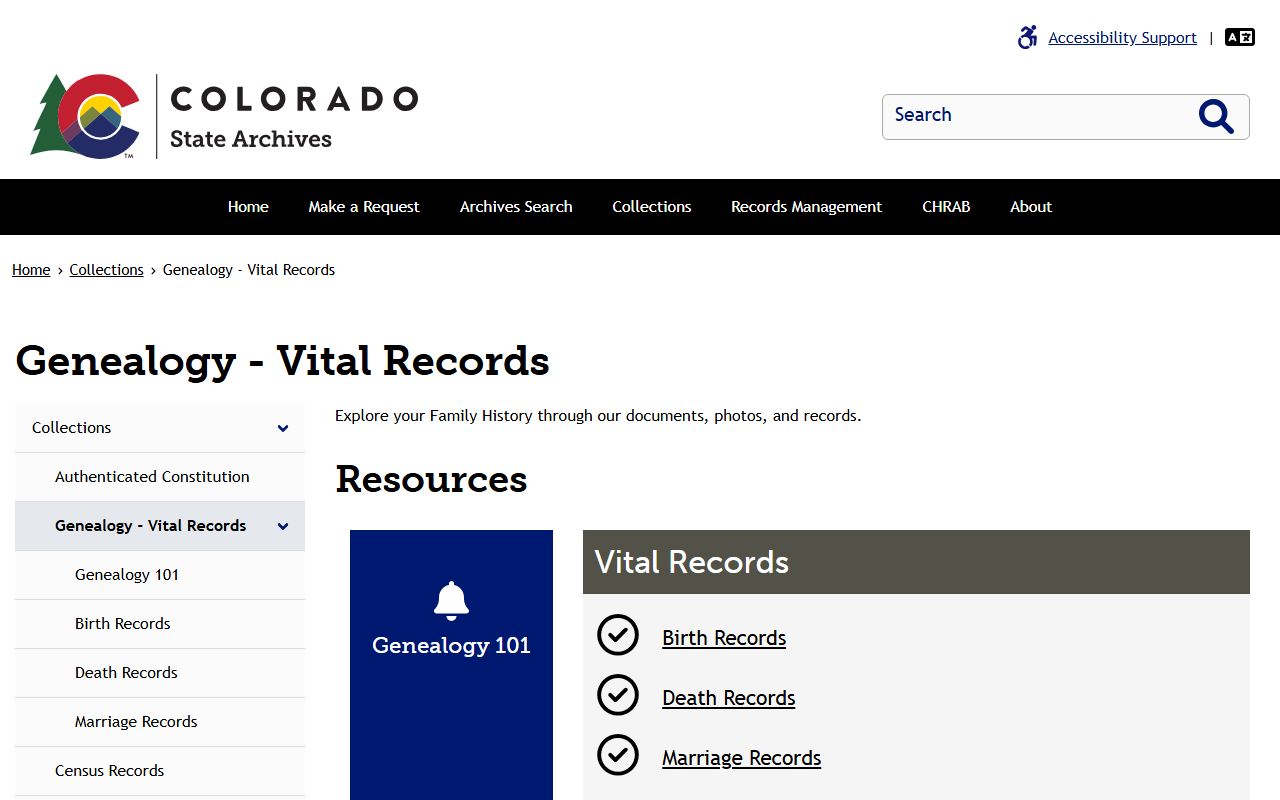
Start your search with clear goals. Focus on one ancestor at a time. Gather names, dates, and places before you begin. Try alternate spellings. Check neighboring counties. Widen date ranges when needed.
Records vary by time period. Early registers may be sparse. Later documents grow more detailed. Some counties kept better records than others. Patience brings rewards.
Colorado Genealogy Records Quick Facts
Where to Find Colorado Genealogy Records
Three main sources hold Colorado genealogy records. Each agency keeps different types of documents. You may need to visit more than one place to complete your family search.
Colorado State Archives
Researchers should start at the Colorado State Archives for documents predating state vital registration. Staff there manage collections spanning territorial days through the mid-twentieth century. Visit them at 1313 Sherman St., Room 1B-20, in Denver. Call 303-866-2358 with questions. Hours run Tuesday through Friday from 10:00 AM to 4:00 PM Mountain Time. Note that Monday visits are not possible. Appointments are required for in-person research.
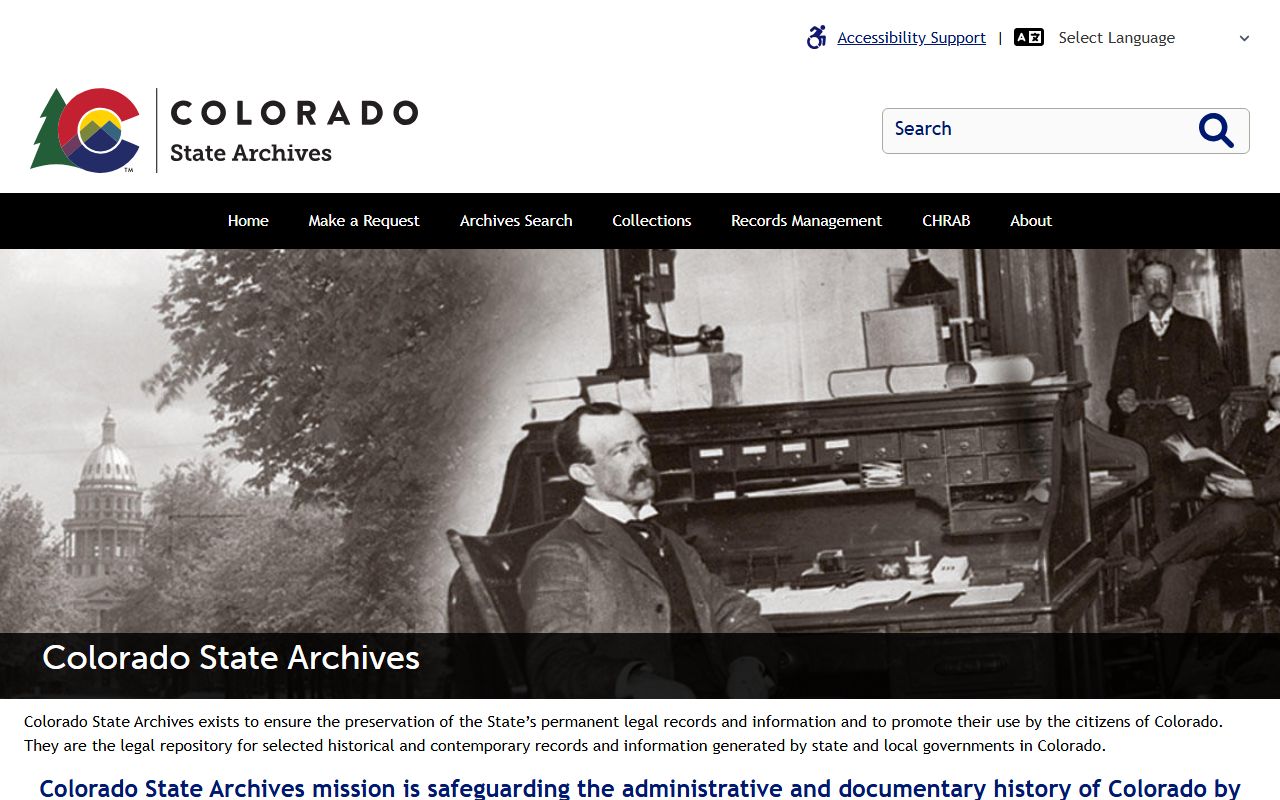
Collections at the State Archives include birth records from before statewide registration began in 1908. Death records from the same early period are also available. Marriage documents predating 1960 fill many shelves. Some county divorce files are here too. Probate packets reveal family relationships. Military service cards honor veterans. Naturalization papers document immigrant journeys. Census schedules place families in time. C.R.S. 24-80 authorizes the archives to preserve Colorado's documented heritage.
CDPHE Vital Records Office
Modern vital records reside with the Colorado Department of Public Health and Environment. Their Vital Records office operates from 4300 Cherry Creek Drive South in Denver. Reach them by phone at 303-692-2200. Current fees stand at $25 for the first copy of any record. Additional copies cost $20 each.
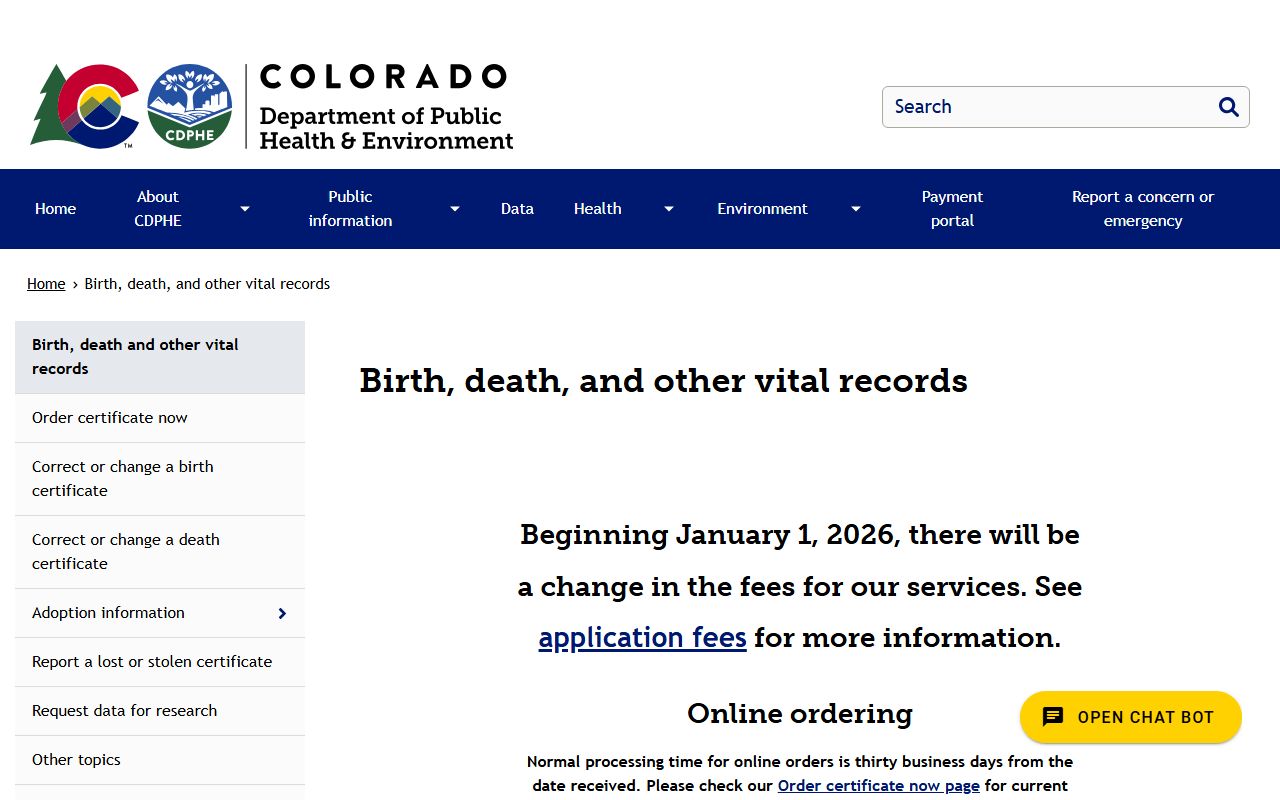
CDPHE maintains birth certificates from 1910 forward. Death certificates span from 1900 to present day. Marriage records are fragmented. They have 1900 through 1939. Then gaps exist until 1975 when recording resumed. Divorce records follow a similar pattern. Holdings include 1851 through 1939. Then 1968 onward is available. Access requires proof of relationship under C.R.S. 25-2-117.
County Clerk and Recorder Offices
Marriage records live at the county level in Colorado. County clerks have maintained these documents since each county formed. Some collections date to the 1860s. Contact the clerk in the county where the wedding occurred. Request certified copies for legal purposes. Fees vary by location.
How to Search Colorado Genealogy Records
Finding ancestors requires strategy. Colorado offers multiple paths to the past. Some records live online. Others wait in file cabinets. Choose your approach based on what you seek.
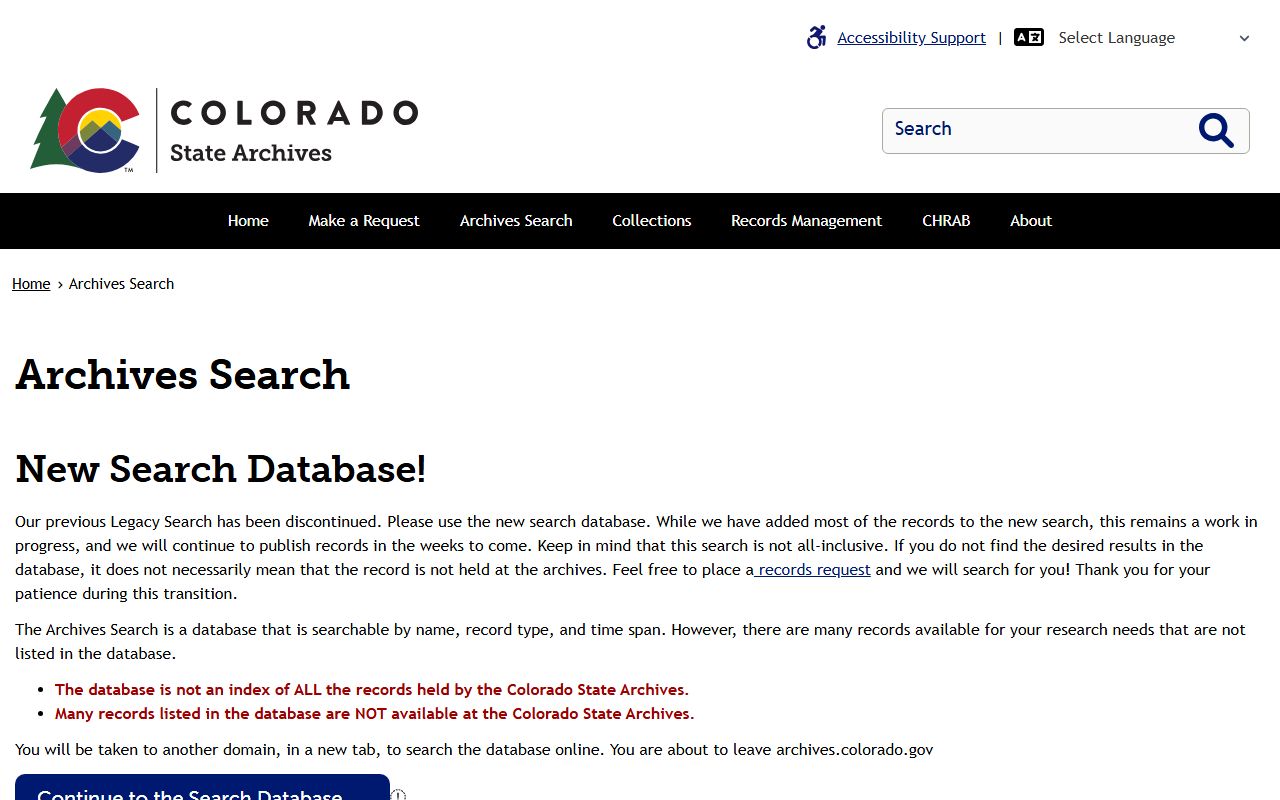
The Archives Search Database opens doors from your home computer. This free tool searches across millions of records. Names yield results. Dates help narrow the field. Places focus your hunt. Collections include vitals, military files, court cases, and land books. Growth continues as staff process new materials.
In-person visits unlock more treasures. Original documents carry details copies miss. Microfilm readers magnify faded text. Staff know their collections well. Call before you travel. Confirm which records are ready. Bring identification. Plan for a full day of discovery.
Smart searchers use variations. Spellings changed over time. Counties shifted boundaries. Dates were estimated. Try alternate name forms. Check neighboring counties. Widen date ranges. Look at related collections. Each new angle reveals more.
Types of Genealogy Records Available in Colorado
Many record types survive in Colorado repositories. Each category reveals different facts about your ancestors. Wise researchers check them all.
Birth Records
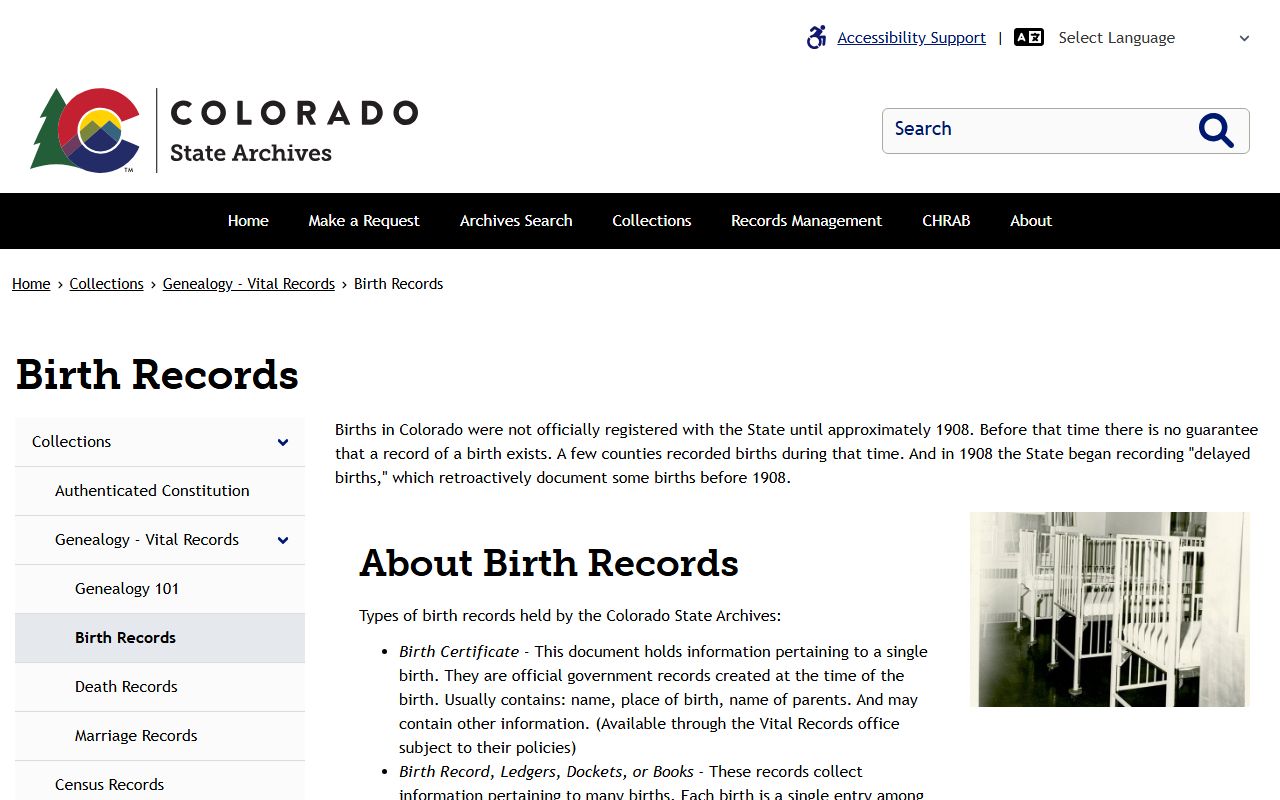
Statewide birth registration began in 1908 under Colorado law. Some counties recorded births earlier. Denver started in 1868. Boulder began in the 1870s. Check the State Archives for these pre-statehood documents. CDPHE holds certificates from 1910 forward. A typical birth record contains the baby's full legal name. Parents' names appear in full. The exact date and specific place of birth are recorded. Parents' birthplaces may be noted. Their occupations might be listed. Hospital names appear for urban births. Midwives signed many rural certificates. Each detail adds color to your family story.
Death Records
Colorado mandated death registration in 1900. The State Archives preserves earlier death records where they exist. CDPHE maintains the complete collection from 1900 to today. Death certificates identify the deceased by full legal name. Exact dates of death appear prominently. Places of death include city and county. Ages at death help calculate birth years. Causes of death use medical terminology of the era. Parents' names often appear. Birthplaces of parents may be included. Burial locations and funeral home names assist in finding gravestones. Informant names suggest family relationships.
Marriage Records
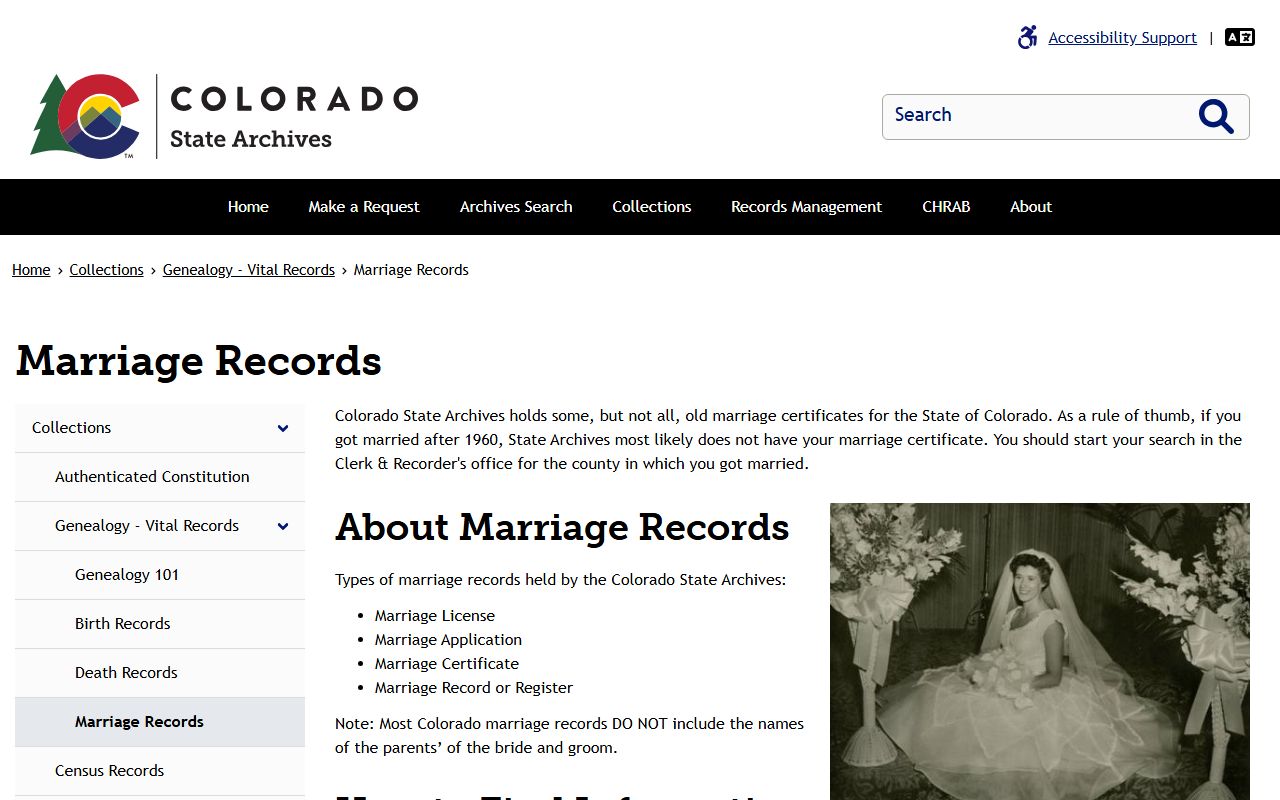
Marriage documents in Colorado are county-level records. County clerks have issued licenses since territorial times. State Archives holds pre-1960 marriage records. CDPHE has a statewide index for 1900-1939 and 1975-present. Marriage licenses show both parties' full names. Ages appear to prove legal capacity. Birthplaces may be noted. Previous marital status is declared. The marriage date is prominently recorded. The exact location appears. Witness names suggest family connections. Officiant names may indicate religious affiliation. Some applications list parents' names.
Divorce Records
District courts process all divorces in Colorado. The State Archives holds older divorce case files. CDPHE maintains divorce certificates for specific date ranges. Files from 1851 through 1939 survive. Records from 1968 forward are available. Divorce petitions state the grounds. Responses tell the other side. Final decrees end the marriage. Property settlements divide assets. Child custody orders protect minors. Support agreements address finances. These files reveal family tensions and resolutions. Access requires meeting privacy requirements under C.R.S. 25-2-117 for recent cases.
Other Genealogy Records
Colorado's archives extend far beyond vital statistics. Probate packets trace estate settlements through courts. Heirs are named specifically. Property inventories list belongings. Military service records document Colorado veterans. Draft registrations describe physical traits. Naturalization records show immigrant paths to citizenship. Census schedules place families in specific years. Land patents reveal homestead claims. Mining records show worker employment. School censuses track children. Each source adds depth to your research.
Colorado Genealogy Laws and Access Rules
Colorado law controls who can access vital records. These rules protect privacy while allowing legitimate research. Understanding the laws helps you get the records you need.
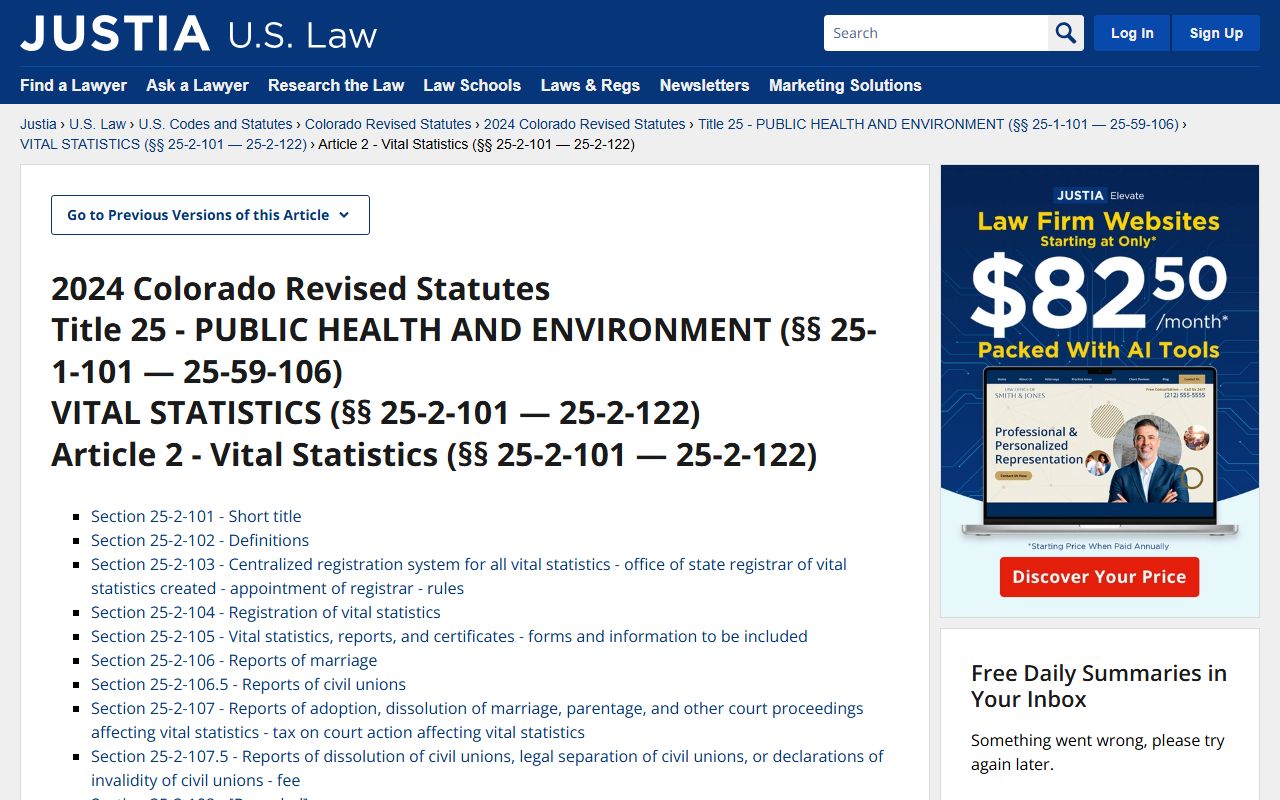
C.R.S. 25-2-117 makes vital records confidential. This statute is the main privacy law. Only certain people can get copies. You must be the person named on the record. You can be an immediate family member. Legal representatives may access records. Others need a court order. C.R.S. 25-2-103 created the Centralized Registration System. This system tracks all vital records in the state.
Records over 100 years old have easier access. These are considered historic records. The privacy rules relax for older documents. You can often view these at the State Archives without proof of relationship. This helps genealogists research distant ancestors. Always check current rules before you visit.
Colorado is a closed record state. This means vital records are not public. Unlike some states, you cannot view anyone's birth or death certificate. You must show you have a right to the record. Bring proof of your identity. Bring proof of your relationship to the person on the record. These rules apply at both the State Archives and CDPHE.
Fees for Colorado Genealogy Records
Research costs money. Plan ahead. Budget for certificates. Fees vary by office and document type.
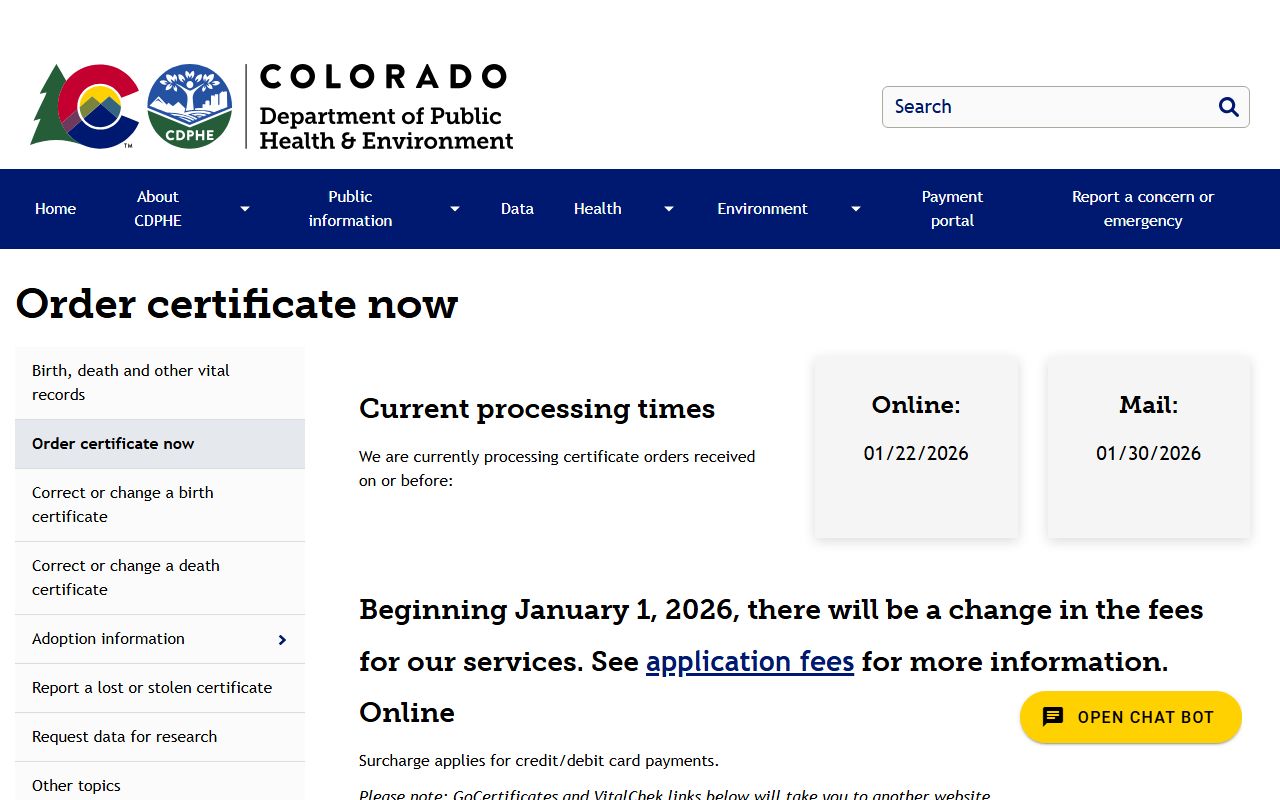
CDPHE raised fees starting January 1, 2026. Birth certificates now cost $25 for the first copy. Death certificates match that price. Additional copies ordered together cost $20 each. These prices cover certified copies with official seals. The fees fund the vital records system. They pay for staff who process requests. They cover paper and security features. They maintain the electronic databases.
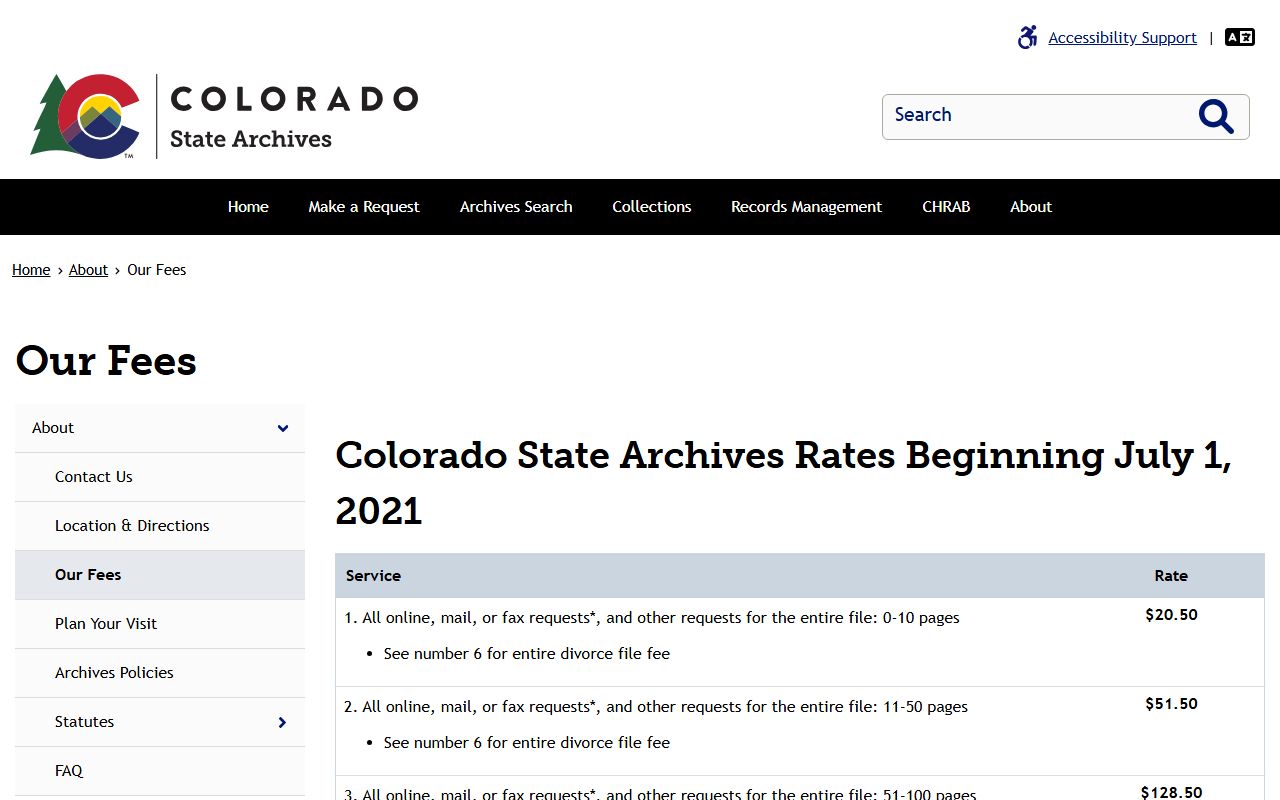
The State Archives uses a different fee model. Reading room access costs nothing. You may view original records free of charge. Copy fees apply when you want duplicates. Self-service copies run $0.25 per page. Staff-assisted copies cost $1 per page. Scanner rentals are $17 daily. Check their fee schedule for current details. Online database searches remain free. Payment is only required when ordering physical copies.
County clerks set independent fee schedules. Marriage record copies vary widely by location. Most offices charge for certified copies. Some add search fees for complex requests. Remote requests often cost more than in-person visits. Call before you travel. Confirm current rates. Ask about payment methods. Some offices accept only cash or check.
How to Get Copies of Colorado Genealogy Records
Multiple paths lead to records. Choose based on your timeline. Online works for patience. Mail suits distant researchers. In-person serves urgency.
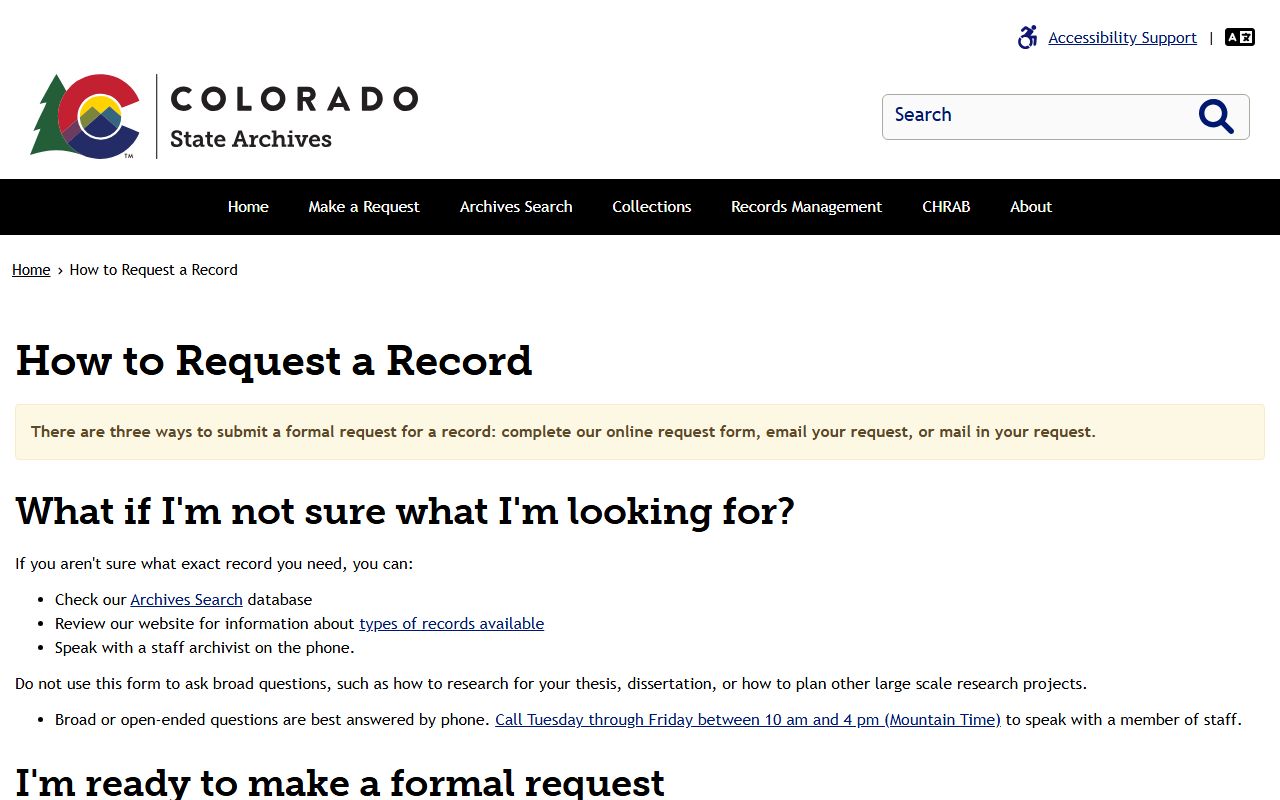
Online ordering brings records to your door. CDPHE accepts web orders through their portal. Third-party vendors like VitalChek offer faster processing for higher fees. The State Archives provides digital request forms. Some county clerks now process marriage record orders online. Expect processing delays of several weeks for most online requests.
Mail requests suit those who plan ahead. Gather required details before writing. Include the full legal name exactly as it appears on the record. Specify the exact date of the birth, death, or marriage. Name the city and county where the event occurred. Attach your documentation showing relationship to the person named. Enclose payment via check or money order. Wait four to six weeks for return mail.
In-person visits yield the fastest results. The State Archives research room sits at 1313 Sherman Street in Denver. CDPHE maintains a public counter at Cherry Creek Drive. County clerks accept walk-ins during business hours. Bring government-issued photo identification. Bring documents proving your relationship to the subject. Carry payment in the form of check, cash, or card. Staff can often produce records while you wait.
Additional Colorado Genealogy Resources
State agencies are just the start. Museums, libraries, and digital collections expand your reach. Each adds unique pieces to your puzzle.
History Colorado preserves the state's material culture. Their archives hold personal papers of prominent families. Photographs show Colorado life across decades. Business records track commerce and industry. Maps reveal changing boundaries and settlements. These resources place families in historical context. Professional archivists assist researchers. Visit their Denver location for hands-on exploration.
The Denver Public Library Western History ranks among the nation's top genealogy collections. Their newspaper archives span territorial days through modern times. City directories trace residents year by year. Mining records document the industry's human toll. Frontier manuscripts capture pioneer experiences. Many holdings exist nowhere else. Reference librarians specialize in family history research.
Colorado Historic Newspapers offers free digital access. The collection exceeds two million pages. Search functions accept names and keywords. Coverage begins in the 1850s with territorial papers. Obituaries reveal family connections. Marriage announcements confirm unions. Legal notices track estate settlements. Birth notices announce new arrivals. This resource works from any home computer.
The National Archives at Denver stores federal records for the region. Census schedules place families every ten years. Military service files document veterans. Land entry records track homestead claims. Federal court cases reveal legal disputes. Naturalization records show paths to citizenship. These federal sources connect with state and county records.
Browse Colorado Genealogy Records by County
All sixty-four Colorado counties maintain historical records. Each county clerk's office holds marriage licenses from the county's founding. District court files contain divorce and probate matters. Some counties boast collections from the 1860s. Others started record-keeping later. Click any county below for specific resources.
Research across county lines. Families moved. Boundaries changed. Records may sit in multiple locations. Check neighboring counties for complete family pictures.
Genealogy Records in Major Colorado Cities
Urban centers attracted generations of Colorado families. Denver boomed during the gold rush. Colorado Springs grew as a health resort. Fort Collins developed around the agricultural college. Each city has unique records. Most cities fall within single counties. Some span multiple counties. Know your city's county before you search.
City directories help track urban ancestors. Newspapers announce births and deaths. Churches recorded sacraments. Fraternal organizations kept membership rolls. Explore your ancestral city.